Among all the components discussed in broader syringe part overviews, focusing more deeply on a single critical part of syringe design, specifically the plunger seal, illustrates how even a seemingly minor component plays an outsized role in overall device reliability. This focused overview explores the seal’s design and function in greater depth.
The Seal’s Fundamental Function
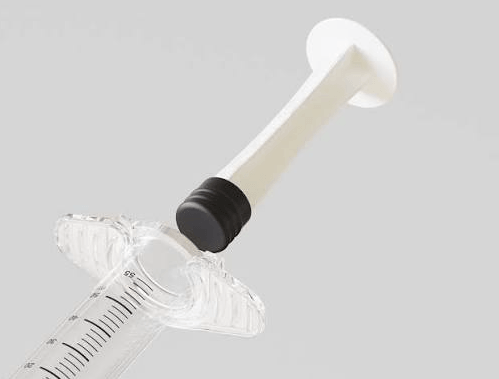
The plunger seal, positioned at the leading edge of the plunger within the barrel, creates the critical seal that both prevents fluid leakage and allows the plunger to generate the pressure differential necessary for drawing in or expelling fluid through the tip.
Material Flexibility Requirements
Achieving reliable sealing performance requires a material with sufficient flexibility to maintain consistent contact against the barrel’s interior surface throughout the plunger’s full range of motion, without becoming so rigid that it creates excessive friction or so soft that it fails to maintain adequate sealing pressure.
The Balance Between Friction and Sealing Effectiveness
Syringe manufacturers need to carefully calibrate seal design to balance smooth, comfortable plunger operation against reliable fluid containment, since a seal generating too much friction makes precise, controlled operation difficult while insufficient sealing pressure risks fluid leakage during use.
Common Seal Failure Modes
Understanding potential seal failure modes, including material degradation over time, improper storage conditions affecting seal integrity, or manufacturing defects, helps clarify why quality control specifically focused on this component matters considerably for overall device reliability.
Latex-Free Design Considerations for This Component
As covered in broader material discussions, many modern seal designs specifically use latex-free materials, addressing allergy concerns while still needing to meet the same functional flexibility and sealing performance requirements as traditional latex-based alternatives.
See also: Why Choosing a Chiropractor Hong Kong Can Improve Your Spinal Health
Why This Small Component Deserves Focused Attention
Despite representing a relatively small physical component compared to the overall syringe assembly, the plunger seal’s direct role in both fluid containment and operational smoothness makes it disproportionately important to overall device performance and reliability.
Exploring Detailed Seal Design Considerations
For additional technical detail on this specific component’s design and function, reviewing information on the part of syringe design focused on plunger seal engineering helps clarify why this seemingly minor part receives such careful manufacturing attention.
Frequently Asked Questions
What is the fundamental function of the plunger seal? The plunger seal creates the critical seal that prevents fluid leakage while allowing the plunger to generate the pressure differential necessary for drawing in or expelling fluid through the tip.
What design tension exists in plunger seal engineering? Manufacturers must balance sufficient flexibility for consistent barrel contact against avoiding excessive friction, since a seal too rigid creates difficult operation while one too soft risks fluid leakage.
Why might a syringe experience plunger seal failure? Potential failure modes include material degradation over time, improper storage conditions affecting seal integrity, or manufacturing defects, all of which quality control processes aim to prevent.
Final Thoughts
Focusing specifically on the plunger seal illustrates how a relatively small component within overall syringe design plays a disproportionately important role in device reliability and function. This detailed component understanding supports appreciation for the engineering precision underlying everyday medical device performance.